TMForum SID (Service Information and Data) provides a comprehensive set of models to describe services, products, and resources in the telecommunications domain. This article will delve into two key models: Service Specification and Service model.
1. Service Specification
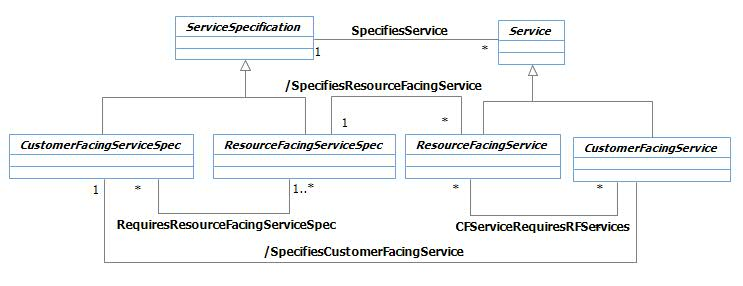
Service Specification defines a set of common characteristics of a service, which can be seen as a “template” for services. It describes the key features of a service, such as standards compliance, service differentiation, dependencies (physical and logical), quality, and cost. Based on service specifications, multiple concrete service instances can be derived.
1.1 Subclasses of Service Specification
- CustomerFacingServiceSpec: Describes customer-facing service characteristics, representing the service provider’s functional knowledge of intangible goods. It can be understood as a “know-how” specification used to build different customer-facing services.
- ResourceFacingServiceSpec: Describes the technical solutions required to implement customer-facing services. It defines the specifications of resources needed to implement services, such as physical devices, logical resources, etc.
2. Service
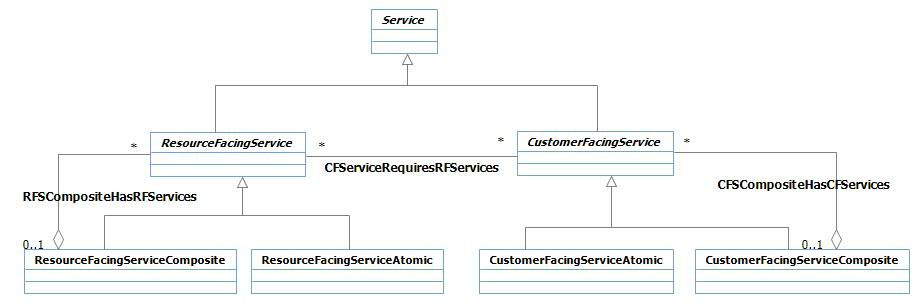
The Service model represents concrete and realizable service instances. It can be divided into two types:
- CustomerFacingService: Customer-facing service, it is bound to a product and supported by resources.
- ResourceFacingService: Resource-facing service, it implements the underlying functionality of customer-facing services and relies on logical and physical resources.
3. Relationships between Service Models
- Relationship between ServiceSpecification and Service: Service specifications define the common characteristics of services, while services are concrete instances derived from specifications.
- Relationship between CustomerFacingService and ResourceFacingService: Customer-facing services require a set of resource-facing services to implement their functionality.
- Relationship between Service and Product: Customer-facing services are bound to products and ultimately provided to customers.
4. Application Scenarios of Service Model
Through service specifications and service models, we can build a complete telecommunications service management system covering the following key functions:
- Service design and creation: Create new service instances based on service specifications.
- Service configuration and management: Configure and manage services, such as updating service parameters, adding/removing resources, etc.
- Service monitoring and troubleshooting: Monitor service status and diagnose and repair problems when they occur.
- Service billing and metering: Measure service usage and bill accordingly.
5. Conclusion
TMForum SID’s service specifications and service models provide an important framework and standards for telecommunications service management. By understanding these models, we can better design, manage, and operate telecommunications services to provide customers with a better service experience.